As an anxiety therapist, my clients often ask me, “Why do I have anxiety?” They wonder if somehow they did something (or didn’t do something) to cause their anxiety disorder to occur.
Rest assured, if you struggle with OCD or an anxiety disorder, it is 100% not your fault.
While we don’t know exactly what causes anxiety disorders, the research shows that anxiety and OCD are generally caused by a combination of two main factors: genetics and environment.
Let’s take a look at each of these causes of anxiety.
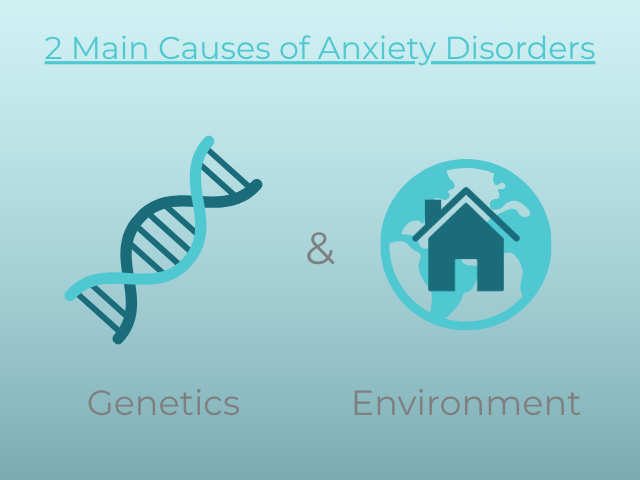
Table of Contents
Genetics
First, you may have inherited a greater likelihood of developing anxiety from your biological parents. Just like green eyes or brown hair, anxiety is something that can be passed down from one generation to the next.
Like other traits, however, just because your parent has dimples, a button nose, or anxiety, that doesn’t mean that you are destined to. According to the research, if you have a parent who has OCD there is a 10-20% chance that you will also have OCD. Other research shows that if you have anxiety, there is a high likelihood that your parent also has anxiety, although it can be difficult to know if this is due to genetics or environment.

Environment
While your environment won’t create an anxiety disorder all on its own*, the way that you learn to handle anxiety growing up can unintentionally make your anxiety worse over time.
For example, if you had a parent or caregiver that worried about everything all the time, then you may have picked up this habit from them simply by copying their behavior.
Or if you learned as a child that avoiding certain things helped you to immediately feel better, then this may have unintentionally solidified your anxiety around those things.
Unfortunately, what tends to help you to feel better in the short-term (like worrying or avoiding) often makes your anxiety worse in the long-run!
Both culture and what is important to you can have a significant impact on what your anxiety or OCD is focused on. For example, if you have pets that you love dearly, your anxiety may latch on to worrying about their health. Or if your family follows a strict religion, you may be more likely to develop scrupulosity OCD around practicing your faith.
Major cultural shifts and global events have also been shown to impact OCD themes, such as the COVID-19 pandemic.
*Please note that OCD and anxiety disorders are in a separate category from PTSD and other trauma and stressor-related disorders.
So What Do You Do If You Have an Anxiety Disorder?
The good news is that whether you were born with anxiety or you picked it up along the way, there are absolutely steps that you can take to find relief.
The two most effective forms of treatment for anxiety are therapy and medication.
The right kind of therapy can help you learn how to cope with your anxiety more effectively and stop letting it interfere with your life. This can lead to both long-term relief and more enjoyment in your day-to-day.
The right medication can make it easier to use the tools that you learn in therapy, although it is not necessary to take medication in order to benefit from therapy.
As a reminder, this blog post is not intended as professional counseling or clinical advice. This article is meant to provide you with some helpful information about the causes of anxiety and OCD. If you are struggling with your mental health, I encourage you to consider reaching out for additional support, professional or otherwise.

– Kristel Roper, LMFT, LPCC
Kristel Roper is a licensed psychotherapist offering therapy services to individuals in the Sacramento area. She specializes in therapy for anxiety and OCD and especially enjoys working women, children, and parents of anxious kiddos. If you have a question for Kristel or are interested in therapy for yourself or your loved one, feel free to reach out.
Photo by Alexandro David from Pexels
Photo by Pixabay